
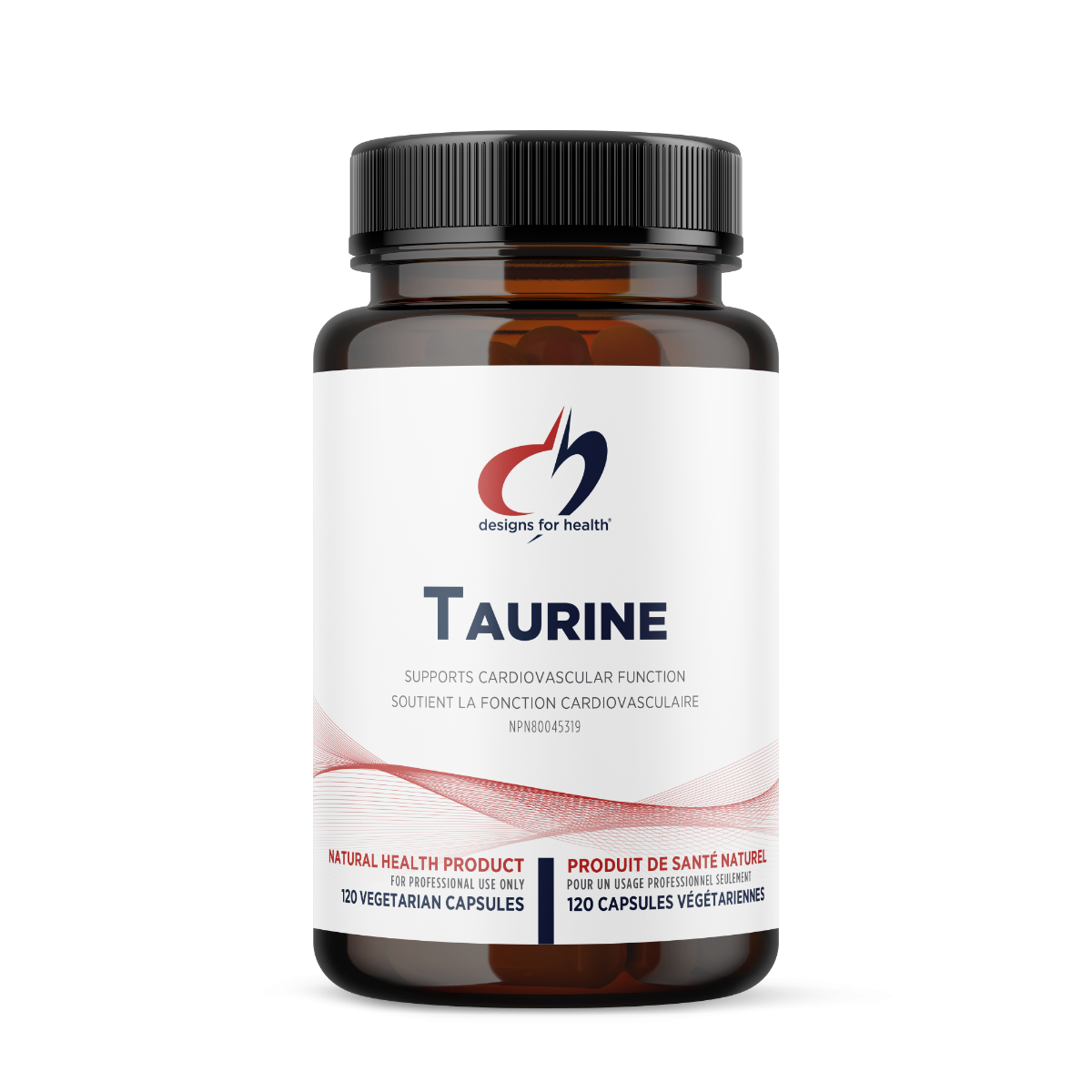
Description
Taurine is a sulfur-containing amino acid that plays many roles in promoting health. Dietary sources of taurine are meat and seafood, especially shellfish such as mussels, clams and oysters. Those who do not eat these foods regularly, especially vegetarians, may be at risk for taurine deficiency. The scientific community is still in disagreement as to whether humans make enough taurine in their own metabolism to meet their needs. Also, elevated levels of homocysteine are a sign that the body may be having di culty making taurine. Because taurine is essential for heart function, immune function, glucose metabolism, and nervous system health, low levels of taurine should be addressed with dietary changes and/or supplementation.
HEART FOOD Taurine is one of the most important nutrients for promoting heart health. It may strengthen the heart muscle and plays a major role in regulating the heart’s contractility.1 Taurine also acts as a natural diuretic by keeping potassium and magnesium inside cells and keeping excess sodium out. Such mineral balance is crucial for heart vitality and overall wellness. By encouraging the excretion of excess fluid, taurine may help to alleviate pressure on the blood vessels. Additionally, taurine may increase circulation and could help support normal blood pressure by dampening the sympathetic nervous system, which, when overactive, constricts blood vessels.
IRREGULAR HEART RHYTHM MAY BE A SIGN OF TAURINE DEFICIENCY Taurine helps promote a stable heart rhythm. This amino acid should be thought of whenever cardiac arrhythmias are present, because a potential cause may be a lack of taurine. Magnesium and potassium are also excellent heart-supporting nutrients that should be considered for patients with arrhythmias.
TAURINE MAY AID WITH SEIZURE DISORDERS Taurine’s calming e ects on cell membranes make it a useful tool in the management of epilepsy. Research in animal studies has shown that taurine may have anticonvulsant action in seizures.2 A study showed people with epilepsy have less taurine than controls, and that some anticonvulsant medication may actually a ect the transport of taurine in the body.3 Some practitioners have reported that those with seizure activity could remain free of seizures when taking taurine.
VISION The retinas contain the highest concentration of polyunsaturated fats of any cells in the body. These delicate fats need antioxidant protection provided by many nutrients, including taurine. A deficiency of taurine may increase damage to the retinas of both animals and humans.
Taurine may benefit for those with macular degeneration, though clearly more research is needed.
SUPPORTING IMMUNE SYSTEM HEALTH Taurine is the most abundant amino acid in our white blood cells. It is the shield these infection fighters use to protect themselves in their battle against viruses, bacteria, and other invaders. When taurine is lacking, white blood cells often will not fire, greatly weakening the body’s ability to protect itself.
BLOOD SUGAR SUPPORT Taurine may help stabilize blood sugar. Taurine appears to do this by potentiating the activity of the insulin receptor. A daily dose 1.5 grams may keep blood sugar lower over the long term and reduce abnormal platelet activity.7 Taurine may improve cellular sensitivity to insulin. People with diabetes should use taurine under medical supervision, as taurine may alter the need for blood sugar lowering medication.
AIDING FAT METABOLISM Bile, which is necessary to break down fats, is made in the liver with the help of glycine or taurine. With optimal taurine intake, bile remains in a liquid state and may be less likely to form gallstones. Additionally, people with cystic fibrosis may be able to digest fats more successfully when taking taurine supplements.
8 Few adverse reactions are associated with taurine supplementation. Most people tolerate between 1.5 to 3 g per day per day well. However, those with ulcers should use taurine carefully because taurine may increase the secretion of stomach acid. Patients with medical conditions should take taurine with the guidance of a health care practitioner, as taurine may change the need for certain medications.
Benefit
- Taurine capsules deliver effective doses of this sulfur-containing amino acid found mainly in meat and seafood. Therefore, vegetarians and non-meat/fish eaters may require supplementation to maintain healthy Taurine levels.
Reviews
There are no reviews yet.